Showing posts with label opc. Show all posts
Showing posts with label opc. Show all posts
Tuesday, December 19, 2017

Saturday, December 9, 2017
PORTLAND CEMENT 02
DRY-PROCESS OF MANUFACTURE
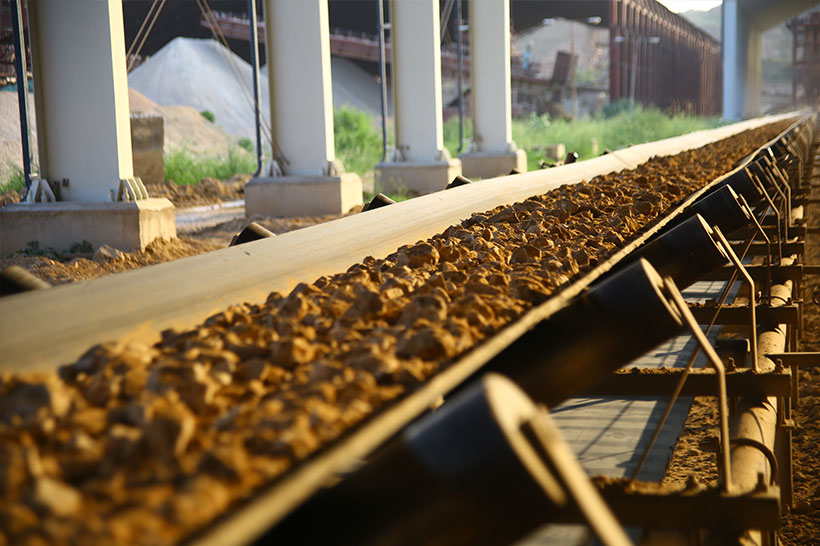
A flow chart of the dry process of manufacture is given in below. The raw materials (limestone and shale, etc.) are crushed at the quarry to about 1 in. Size and then conveyed to the works where they are air-dried and ground by raw-meal grinding mills to an extremely fine powder. The mills are normally of ball or edge runner type. The raw meal is then transferred to the raw meal blending silos where the promotion of raw materials are checked and adjusted as required, the meal being mixed either mechanically or by the vigorous entry in quantity of compressed air through the floors of the blending silos.
The raw meal is then passed to the granulator which comprises an inclined rotating dish or drum into which the raw meal is admitted and on to which about 14 per cent of water is sprayed. The addition of the water causes the meal to from into nodules which are passed into a preheater, one type of which is a moving grate heated by the hot gases emitted from the kiln. In the preheater the nodules are backed dry before entering the upper end of the kiln.
The kiln itself is similar in construction and in manner of support to that used in the wet-process except that it is shorter, there being far less heat exchange to perform. Clinker is discharged from the lower end of the kiln as in the wet-process,and from the stage onwards the procedure for grinding,storage, and packing is as before.
flow chart of the dry process of manufacture

WET-PROCESS OF MANUFACTURE :-https://26stream.blogspot.com/2017/12/portland-cement.html
Source from :-
OSCAR FABER'S
REINFORCED CONCRETE
PORTLAND CEMENT
WET-PROCESS OF MANUFACTURE
A simplified flow-chart for the production for the cement by the wet-process is given in below figure. The raw materials ( chalk and clay) are mixed with water to a creamy consistency in wash-mills. These are circular tanks in which a central vertical spindle carries a rotating steel framework from which heavy harrows are suspended. Grating are provided above the perimeter walls of the wash-mill tanks, and when the harrows have broken the raw materials down to the size of the grating openings, the slurry is splashed through the gratings to an external annual trough.The was-mills are generally of three grades known as Primary , secondary and screening with the roughest harrows and coarsest screens at the primary mills. The different grade s of mills are arranged in series so that the slurry which has passed the screens of the primary mills is fed by gravity to the secondary mills and so on, until on leaving the screening mills only 5 per cent of the slurry is retained on a B.S. 170 mesh test sieve.
The slurry is then pumped to tall mixing tank where it is kept agitated by compressed air introduced at the bottom of the tanks. Here the proportion of raw materials are checked and adjusted as required. The slurry is then passed to large slurry storage tanks where it is kept stirred by vertical paddles suspended from rotating arms. Here it waits it's turn until the kilns are ready to revive it .
The kilns are frequently about 300 ft.long, 12ft. diameter, made up of steel plate and lined with firebrick. They are set at an angle of about 2.5 degrees to the horizontal and mounted on rollers at intervals of 60ft. Or so and geared so as rotate slowly about their axis . The slurry is fed into the upper end of the kilns and, owing to the combined effect of the slope and rotation, gradually works it's way down to the lower end where the kiln is fired. This the slurry meets the hot gases and flames which pass up

Through the kiln and thence to dust collectors and the chimney.The slurry is first dried out at the upper(cooler) part of the kiln, and as it descends and reaches the zone of maximum temperature (about 2800°F) near the lower end, the constituents combine chemically .At this stage the slurry has been burned into extremely hard nodules about the size of walnuts known as clinker, which falls out of the lower end of the kiln into a cooler where a current of air cools it down from its white heat. The cooling air is thus heated to about 800°F and becomes the secondary combustion air at the lower end of the kiln, so economising in fuel.
The clinker is then ground in steel tube grinding mills with about 3 per cent of gypsum to retard the setting process of the finished cement. The mills are horizontal rotating cylinders often about 30 ft. Long and 6.5 ft. diameter divided into three or four compartments :each compartment contains hard-steel and cast iron balls, which are lifted by the rotation of the mill so as to fall and break the clinker by crushing and attrition. Where there are four compartments in the mill, the first generally contains ball about 4 in . Diameter, the next has balls about 3 in., next 2., and the last 1 in. The cement passes from one compartments to another, and grinding continues until for ordinary Portland cement only about 5 per cent is retained on a B.S .170 mesh test sieve ; and for rapid-hardening Portland cement only about 1.0 per cent residue is retained. The cement is then conveyed to large silos where it is stored until required for packing or Bulk loading and dispatch.
Source from :-
OSCAR FABER'S
REINFORCED CONCRETE
DRY-PROCESS OF MANUFACTURE :-https://26stream.blogspot.com/2017/12/portland-cement-02.html
Thursday, December 7, 2017
HIGH ALUMINA CEMENT
HIGH ALUMINA CEMENT

High alumina cement is also known as aluminous cement or cement fondu . Its manufacture is entirely different from that of Portland cements. The raw materials are chalk and bauxite, the latter being a special clay of extremely high alumina content. The raw materials are mixed together dry, fed into special furnaces, and melted at an extremely high temperature. The molten materials is cast into pigs, broken up, and then ground into cement without the addition of any other material whatsoever. This is a much more expansive process than the manufacture of a Portland cement, but there are certain applications where the properties of high Alumina cement have advantage over other types. It producers concrete of far grater strength and in considerably less time even than Rapid Hardening Portland cement, allowing earlier removel of form work. It is also more resistant to certain forms of chemical attack, such as that of sulphates, oils, and sugar juices. These properties make it attractive in spite of its great cost, when high strength are required at a very early age or when corrosive conditions are sufficiently severe.
however, great care has to be taken in the use of High Alumina cement, It must not be mixed with any other type of cement , and has to be stored separately and handled by separate mixers, transporters and other equipment. The heat given off on setting is greater than with other cement, and the concrete is best not cast in thickness greater than 12 in. to 15 in. unless special precautions are taken. Nor should it be cast when its temperature on setting can rise about 80 ˚F. Thus it is inapplicable to work in tropical countries where the excessive temperature may have a deleterious influence on its strength. In view of the heat given off on setting , it is necessary in all application to strip formwork at a vary early stage and keep the concrete thoroughly saturated with water by continuous hosing for a period of at least 24 hours after placing. High Alumina cement should only be used strictly in accordance with the manufacturer's recommendation.
Quality of High Alumina cement
1./ Strength
Minimum requirements for mortar compressive strength are :
6000 lb/sq.in. at 1 day;
7000 lb/sq.in. at 3 days and must show an increase on the 1-day test results
2./ Setting Time
Initial setting time is to be not less than 2 hours and not more than 6 hours.
Final setting time is to be not more than 2 hours after the initial set.
3./ Fineness
Minimum requirement of specific surface is 2250 sq.cm/gm
4./Soundness
The opening of the points in the Le Chatelier test is not to exceed 1.0 mm.
5./ Chemical composition
The total alumina content is not to be less than 32 per cent by weight of the whole. The ratio of the percentage by weight of alumina to the percentage by weight of lime is to be not less than 0.85 nor more than 1.3 .
OSCAR FABER'S
SULPHATE RESISTING PORTLAND CEMENT
SULPHATE RESISTING PORTLAND CEMENT
Sulphate resisting cement is a Portland cement and mainly differs from Ordinary Portland cement in that its chemical components in the raw mix are generally adjusted so that , after burning , the compound tricalcium aluminate is reduced to something less than 5 per cent. It is the tricalcium aluminate that is attacked by sulphates in ground waters,and consequently Sulphate Resisting Portland cement is able to resist attacks of sulphate concentration up to certain limited amounts.
Such sulphate concentration are frequently found in the ground in many parts of Great Britain and elsewhere, and where these are greater than 0.5 per cent in the soil, or 100 parts in 100,000 parts of ground water , are liable to cause disintegration of concrete made with Ordinary Portland cement , and the use of Sulphate Resisting cement becomes necessary. where sulphate concentrations exceed 2 per cent in the soil or 500 parts in 100,000 parts of ground water , the protection given by sulphate resisting Portland cement normally ceases to be effective , and consideration has to be given to the use of high Alumina cement. The suphate concentration of sea water is generally only about 220 parts per 100,000.
Whenever the use of special cement is considered, it is best to seek advice from the cement manufacturers; and satisfactory results can then only be achieved using compact dense concrete free from voids or excess mixing-water. The use of special cement will not compensate for weak mixes or poor workmanship.
Credit to :- OSCAR FABER'S
Subscribe to:
Posts (Atom)
-
 STIFFENER MEMBERS Stiffener members are used in block/brick wall masonry to have a proper bond/ strength between block wall and structu...
 -
 Introduction of safety The aim of monitoring safety on site is to avoid injuries arising from construction activities. Generally m...
 -
 SPACER BAR Spacer are used to separate the rebar layer of the beams 25mm diameter and 250mm long ( its depend on beam width if beam w...